Views: 0 Author: Site Editor Publish Time: 2026-01-25 Origin: Site
As electric vehicles (EVs), energy storage systems (ESS), and advanced power electronics continue to grow rapidly, the demand for high-performance silicone foam materials has increased significantly. Engineers and procurement teams must select materials that deliver reliable sealing, thermal insulation, flame resistance, and long-term durability in harsh operating environments.
Two frequently compared materials in this category are ROGERS HT-840 silicone foam and KOMPA KB105F silicone foam.
While ROGERS HT-840 is widely recognized as an industry reference material, KB105F has emerged as a proven alternative to ROGERS HT-840, offering comparable or improved performance with better cost efficiency, especially in EV battery and ESS applications.
This page provides a detailed engineering-level comparison to help designers evaluate whether KB105F can serve as a reliable HT-840 replacement.

About KOMPA KB105F Silicone Foam
KB105F is a closed-cell, flame-retardant silicone foam developed by KOMPA New Material for demanding energy and industrial applications. It is designed to serve as a high-performance alternative to ROGERS HT-840 silicone foam in sealing, insulation, and gap-filling scenarios.
Key characteristics include:
Firm and stable density
Low compression set (<5%), ensuring long-term rebound
UL94 V-0 flame rating
Excellent environmental sealing performance
Custom thickness range: 0.8–25 mm
Strong resistance to water, moisture, dust, UV, and chemicals
KB105F is widely used in EV battery packs, ESS cabinets, high-voltage insulation systems, power modules, industrial sealing, and outdoor electronics, where long-term reliability is required.
About ROGERS HT-840 Silicone Foam
ROGERS HT-840 is one of the most recognized firm silicone foam materials globally and is often used as a reference material for high-temperature and flame-retardant sealing applications.
Typical applications include:
Automotive gasketing
Rail, aerospace, and transportation systems
HVAC and lighting enclosures
Outdoor electrical housings
General industrial sealing
Due to its stable mechanical properties and proven track record, HT-840 is commonly used as a benchmark material, making it a key comparison point when evaluating HT-840 alternative silicone foams such as KB105F.
The following table compares the technical data of KB105F silicone foam and ROGERS HT-840 based on standard ASTM and UL test methods, helping engineers evaluate KB105F as a direct HT-840 replacement.
Properties | Test method | ROGERS | Test method | KOMPA | Marks |
PHYSICAL | |||||
Color | Visual | Black/Grey/Red | Visual | Black/Grey/ Red/White | PASS |
Thickness (mm) | Internal | 0.79-6.35 | GB/T17794-2021 | 0.8-25 | PASS |
Density (g/cm3) | Internal | 0.448 | ASTM D 1056 | 0.5±0.05 | PASS |
Compression Force Deflection.(Kpa) | ASTM D 1056 | 142 | ASTM D 1056 | 110±25 | PASS |
Compression Set (%) | ASTM D 1056 | <5 | ASTM D 1056 | <5 | PASS |
Water Absorption (%) | Internal | <5 | ASTM D 570 | <5 | PASS |
Tensile Strength (kpa) | / | / | ASTM D 412 | ≥400 | |
Elongation at break (%≥) | / | / | ASTM D 412 | ≥90 | |
| FLAMMABILITY | |||||
Flame Resistance | UL94 | V-0 | UL94 | V-0 | PASS |
Flame Spread Index (Ls) | ASTM E 162 | <35 | ASTM E 162 | <25 | PASS |
Smoke Density (Ds) | ASTM E 662 | Flaming Mode, | ASTM E 662 | Flaming Mode, | PASS |
Burn Length | FMVSS 302 | <100 mm/min | FMVSS 302 | <100 mm/min | PASS |
THERMAL | |||||
Temperature Range(℃) | Internal | -55~200 | ASTM D 1056 | -60~200 | PASS |
Thermal Conductivity | ASTM C 518 | 0.09 | ASTM C 518 | 0.07 | PASS |
Low Temperature Flex | ASTM D 1056 | PASS | ASTM D 1056 | PASS | PASS |
Low Temperature Brittleness | ASTM D 746 | PASS | ASTM D 746 | PASS | PASS |
| ELECTRIC | |||||
Dielectric Strength (V/mil) | ASTM D 149 | 66 | ASTM D 149 | 90 | PASS |
Volume resistivity (Ω·cm) | ASTM D 257 | 1014 | ASTM D 257 | 1014 | PASS |
Both KB105F and HT-840 belong to the category of firm, closed-cell silicone foams with similar density levels.
However, KB105F offers a significantly wider thickness range (0.8–25 mm) compared to HT-840 (0.79–6.35 mm), providing engineers with greater design flexibility when selecting an HT-840 alternative material.
This expanded thickness range supports applications such as:
Gap-filling structures in EV battery packs
Battery pack sidewall buffers
ESS cabinet sealing systems
High-voltage insulation and barrier partitions
The closed-cell structure of KB105F ensures consistent sealing force, low water absorption, and stable mechanical behavior across all thickness options.
Both materials demonstrate similar compression force deflection values, indicating stable mechanical behavior under assembly loads, which is critical for battery pack sealing and enclosure applications.
A low compression set indicates excellent long-term recovery after sustained compression.
Both HT-840 and KB105F achieve <5% compression set, making them suitable for EV battery sealing, ESS cabinet gaskets, and outdoor enclosures.
KB105F provides higher tensile strength and elongation, resulting in better tear resistance and structural durability.
This advantage improves performance during:
Manual or automated assembly
Die-cut gasket handling
Bending and insertion processes
Applications exposed to mechanical stress
Both materials meet UL94 V-0 requirements. However, advanced fire-safety testing shows KB105F performs better in critical parameters:
ASTM E162 Flame Spread Index
HT-840: <35
KB105F: <25
ASTM E662 Smoke Density (1.5 min flaming)
HT-840: <100
KB105F: <50
Lower flame spread helps slow fire propagation, while reduced smoke density improves safety in EV battery and ESS thermal-runaway scenarios.
This makes KB105F a safer HT-840 replacement for energy applications.
Both materials provide similar thermal performance:
HT-840: -55°C to +200°C
KB105F: -60°C to +200°C
Both pass low-temperature brittleness tests and high-temperature aging tests.
Thermal conductivity is nearly identical, ensuring good thermal insulation properties.
HT-840: 66 V/mil
KB105F: 90 V/mil
KB105F’s 60% higher dielectric strength offers better protection in high-voltage EV and ESS environments, such as:
Busbar insulation
Battery module HV partitions
Wiring harness pads
Power electronics cushioning
This is a significant advantage for new energy industries.
Both foams are closed-cell and resistant to water, dust, UV, ozone, and chemicals.
However, KB105F’s lower compression set and more stable rebound force allow it to maintain long-term sealing performance, particularly in outdoor and high-humidity ESS environments.
EV battery pack sealing and protection
ESS cabinet door gaskets
High-voltage insulation barriers
Busbar and wiring harness protection
Industrial equipment vibration absorption
Outdoor electrical enclosures
General industrial sealing
HVAC & lighting components
Automotive gasketing
Mechanical cushioning
Looking for a reliable replacement for ROGERS HT-840 silicone foam?
KB105F provides comparable performance with greater flexibility and cost efficiency.
Overview: A dedicated silicone materials manufacturer focusing on EV, energy storage, and automotive industries.
Strengths:
Specializes in fire-resistant and thermal insulation silicone foam
Full range of thicknesses, densities, and customization (with or without adhesive backing)
ISO 9001 & IATF 16949 certified quality system
Fast delivery and flexible OEM/ODM support
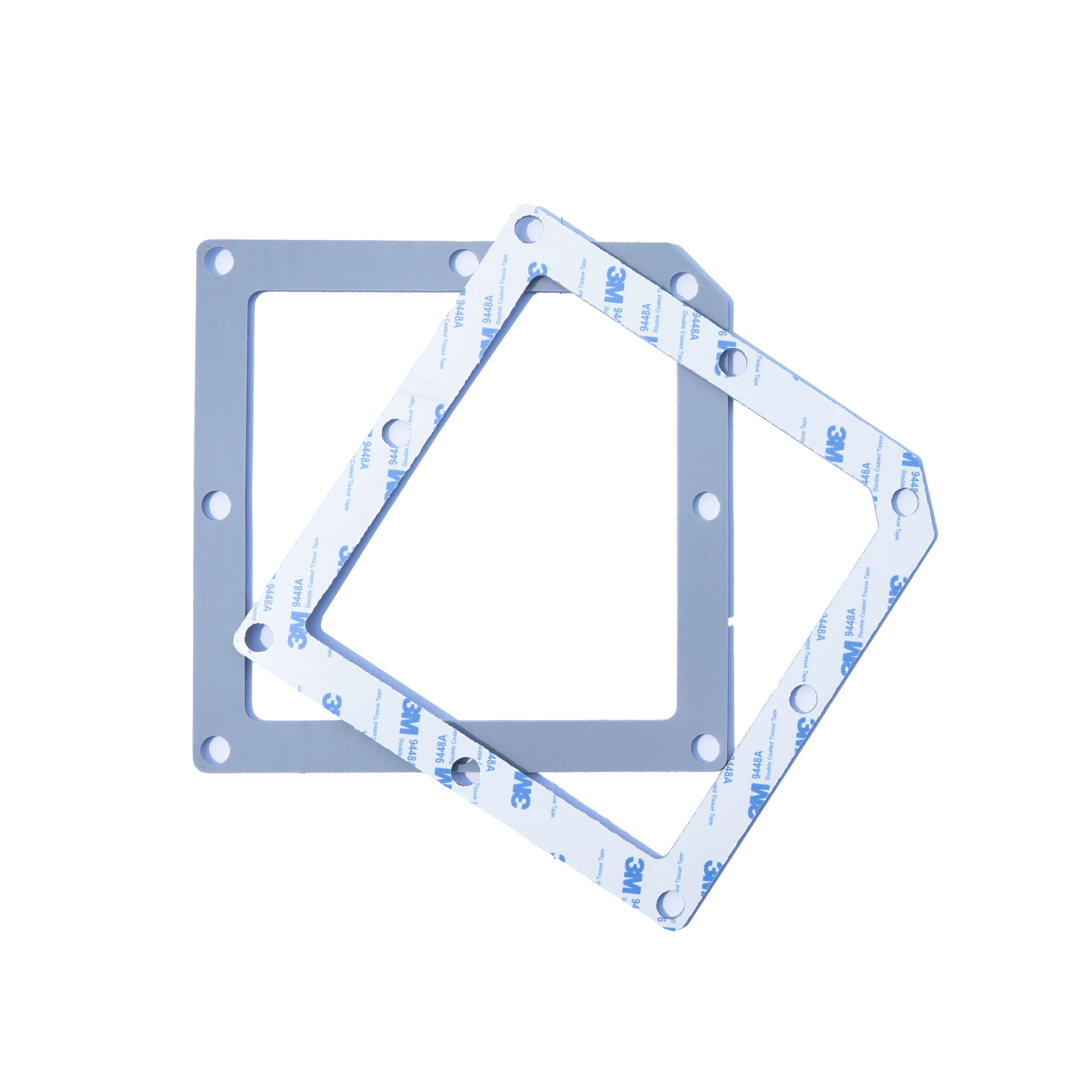
silicone foam products
silicone foam gaske
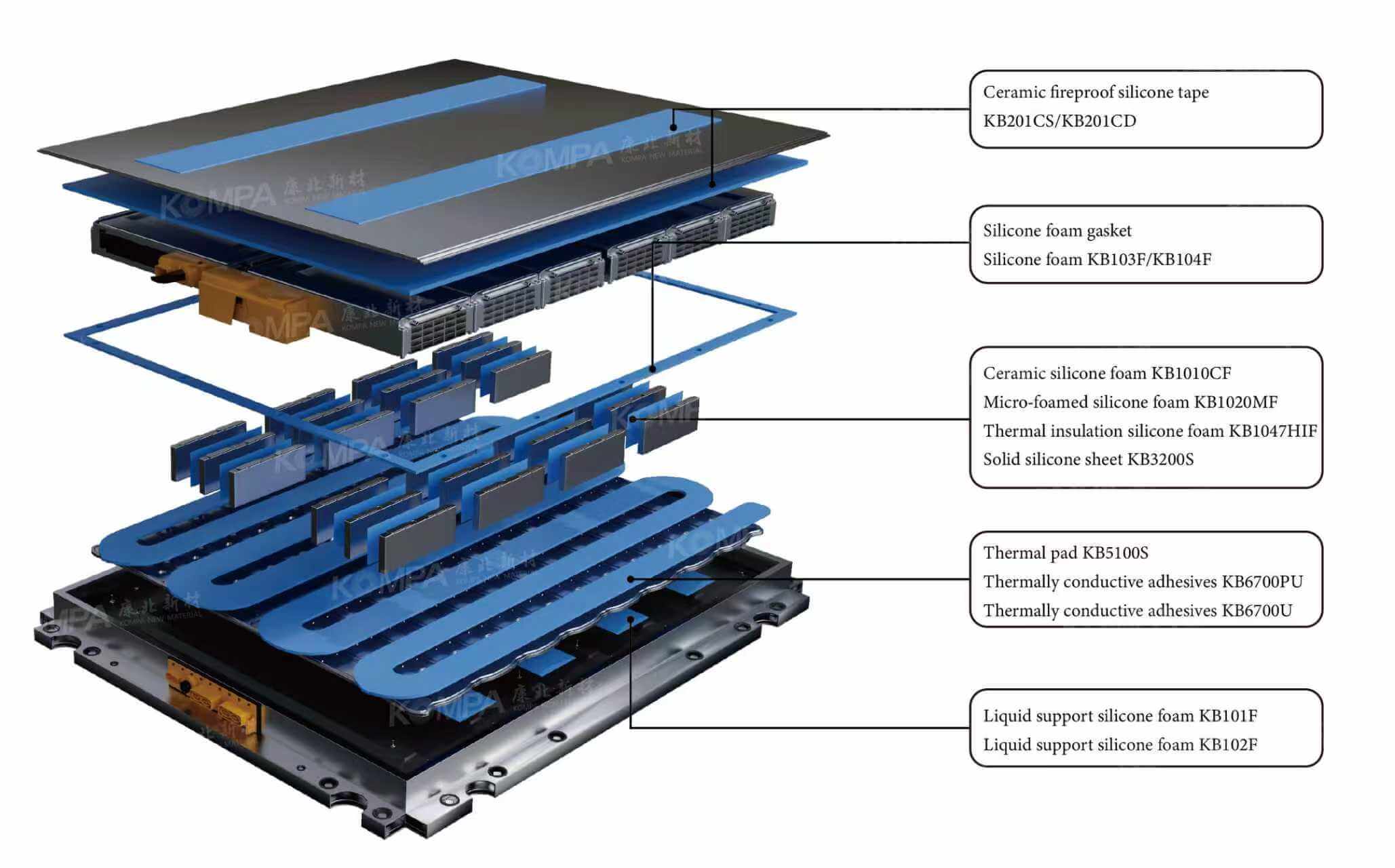
Used as a sealing gasket around battery pack enclosures to prevent dust, moisture, and gas leakage.
Provides flame-retardant barriers and thermal insulation, helping slow fire propagation and protecting cells from thermal runaway.
Maintains long-term compression set resistance even under high temperatures and pressure cycles.
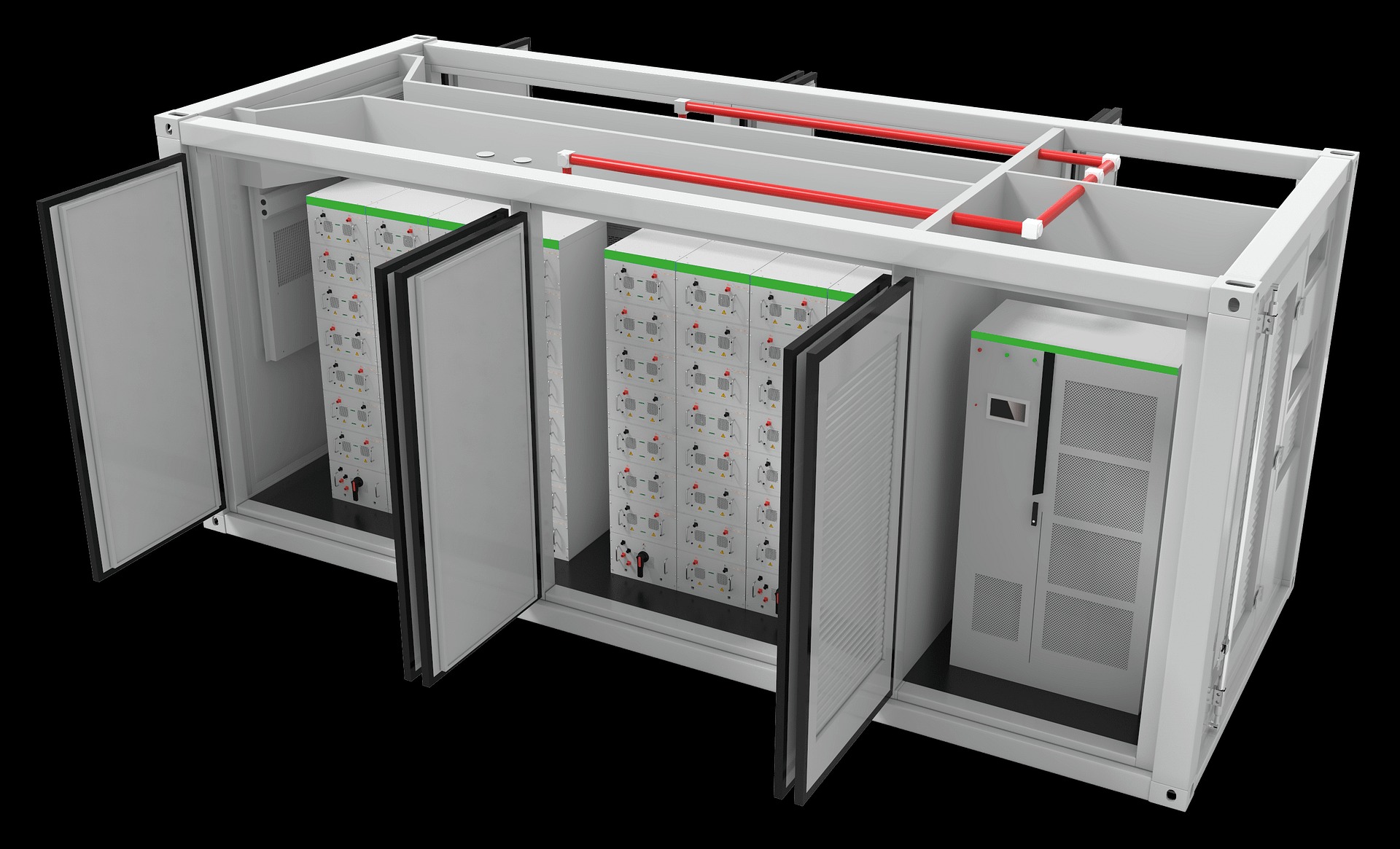
Energy storage cabinets (thermal & electrical insulation)
Acts as thermal barriers to reduce heat transfer between battery modules and cabinet structures.
Offers electrical insulation to prevent short circuits or arcing within compact spaces.
Supports environmental sealing against dust, moisture, and vibration.
Our Key Partners Include
Huawei – Global leader in communications, smart devices, and energy solutions
ZENERGY – Trusted supplier specializing in new energy battery systems
SAIC Motor – One of China’s largest and most innovative automotive manufacturers
Dongfeng Motor – Leading state-owned company in commercial and passenger vehicles
CRRC – World’s largest manufacturer of rail transit equipment and systems.
CALB – Global innovator in lithium battery technology and energy storage solutions
Why KOMPA? Unlike global giants that serve broad markets, we focus on energy applications, making us the ideal partner for battery manufacturers, EV OEMs, and energy storage integrators.
KB105F Silicone Foam
https://www.kompsisiliconematerial.com/silicone-foam-manufacturers-kb105f.html
EV Battery Materials
https://www.kompsisiliconematerial.com/electric-battery-system.html
Energy Storage Materials
https://www.kompsisiliconematerial.com/photovoltaic-energy-storage.html
Contact KOMPA for Samples, Pricing or Technical Support
Our engineering team can help you choose the best silicone foam solution for your EV, ESS or industrial project.
Email: jenny@kompanewmaterials.com
Website: www.kompsisiliconematerial.com