
Views: 0 Author: Site Editor Publish Time: 2025-12-23 Origin: Site
As electric vehicles (EVs) continue to evolve, battery packs are becoming more compact, more energy-dense, and more demanding in terms of safety and reliability. Among the many design considerations inside an EV battery pack—thermal management, electrical insulation, flame retardancy—sealing performance is often underestimated.
One material property plays a decisive role in whether a battery pack seal performs reliably over time: compression set.
In this article, we’ll explain what compression set is, why it matters so much in EV battery sealing, and how to choose the right silicone foam material to minimize long-term sealing failure.
Compression set directly determines whether an EV battery seal will still work after years of thermal cycling and continuous compression.
Compression set is a measure of a material's ability to return to its original thickness after being compressed for a certain period under specified conditions (temperature, time, and compression ratio).
In simple terms:
Compression set tells you how much a sealing material “fails to recover” after long-term compression.
Low compression set → material springs back → sealing force maintained
High compression set → material stays flattened → sealing force lost
Compression set is typically expressed as a percentage.
Lower values indicate better elastic recovery.
Unlike dynamic seals, most EV battery pack seals are static:
Lid-to-housing seals
Module-to-module seals
Enclosure and vent interfaces
Once assembled, these seals may remain compressed for 10–15 years without adjustment.
If the sealing material exhibits high compression set, the result is inevitable:
Reduced contact pressure
Gap formation
Loss of ingress protection (IP)
This is why low compression set silicone foam is essential for EV battery sealing applications.
EV battery packs operate across a wide temperature range:
Sub-zero cold starts
Continuous high-temperature operation
Repeated thermal cycling during charging and discharging
Each thermal cycle stresses the sealing material.
Materials with poor compression set performance:
Harden over time
Lose elasticity faster
Fail to maintain consistent sealing force
In contrast, closed cell silicone foam with low compression set retains resilience even after prolonged exposure to elevated temperatures.
When sealing performance degrades, multiple risks emerge:
Moisture ingress → corrosion, short circuits
Dust contamination → insulation degradation
Electrolyte vapor leakage → accelerated aging
Reduced fire containment in thermal runaway scenarios
In EV and energy storage systems, sealing failure is not just a durability issue—it is a safety issue.
Engineers often focus on:
Hardness
Density
Flame retardancy (UL94 V-0)
While all are important, compression set directly determines sealing longevity.
| Property | Short-Term Impact | Long-Term Impact |
|---|---|---|
| Hardness | Assembly force | Minor |
| Density | Structural feel | Moderate |
| Flame retardancy | Safety compliance | Conditional |
| Compression set | — | Critical |
A sealing material may meet all initial specifications, yet fail prematurely if compression set is not controlled.
Modern battery packs aim to reduce size and weight.
This often leads to:
Thinner gasket designs
Lower allowable compression range
In such designs, there is no margin for material relaxation.
Even a small loss in recovery can result in sealing failure.
Battery enclosures can experience sustained temperatures of 80–120°C, depending on location.
Many conventional foam materials—especially non-silicone elastomers—exhibit:
Rapid compression set increase
Permanent deformation
Brittleness over time
This is where high-performance silicone foam shows its advantage.
Some materials show acceptable compression set values at:
Room temperature
Short test durations
But fail under real-world EV conditions, where both time and temperature are significantly higher.
Silicone foam is widely used in EV battery sealing because it offers:
Excellent thermal stability
Wide operating temperature range
Natural resistance to aging and oxidation
Most importantly:
Properly formulated silicone foam delivers consistently low compression set.
For EV battery sealing, closed cell silicone foam is generally preferred:
Prevents moisture absorption
Maintains internal structure under compression
Provides better long-term recovery
Open cell materials, while softer, are more prone to:
Permanent collapse
Moisture uptake
Rapid compression set degradation
While exact requirements vary, typical EV battery sealing targets include:
Compression set ≤ 25%
(tested at elevated temperature and defined time)
Stable performance after thermal aging
Minimal thickness loss after long-term compression
Materials designed as alternatives to ROGERS BISCO HT-800 often focus heavily on optimizing compression set performance under EV-specific conditions.
An often-overlooked advantage of low compression set materials:
They maintain sealing force with less initial compression
This allows:
Reduced bolt load
Lower assembly stress
Improved dimensional tolerance
For large battery packs, this translates directly into design flexibility and cost savings.
In practice, poor compression set can lead to:
Field failures after 2–3 years
Costly recalls or warranty claims
Redesign of sealing systems mid-platform
Many OEMs now consider compression set performance as a go/no-go criterion during material selection.
When evaluating materials, engineers should ask:
What is the compression set at operating temperature, not just room temperature?
How does compression set change after thermal aging?
Is the foam closed cell and structurally stable?
Has the material been validated in EV or ESS applications?
Can it serve as a qualified alternative to BISCO HT-800?
KB103F is HT800 alternative
In EV battery sealing, compression set is one of the most decisive performance indicators.
A sealing material that looks acceptable at assembly may fail silently years later if compression set is overlooked.
For engineers and procurement teams working on EV and energy storage systems, prioritizing low compression set silicone foam is not just good practice—it is essential for long-term safety, reliability, and performance.
KB103F Liquid Silicone Faom is ROGERS HT800 alternative
In EV battery sealing applications, many engineers are familiar with materials such as ROGERS BISCO HT-800, which is widely recognized for its low compression set performance.
However, as EV platforms scale globally, there is increasing demand for qualified alternative silicone foam materials that offer comparable compression set behavior while providing greater flexibility in supply and cost optimization.
Modern closed cell silicone foams designed for EV and energy storage systems now focus on maintaining stable compression set values under long-term thermal exposure, making them suitable for battery pack sealing and enclosure applications.

KB103F is a closed-cell, flame-retardant silicone foam engineered by KOMPA New Material for demanding industrial environments.
Key characteristics include:
Medium-firm density
Excellent compression set (<5%)
UL94 V-0 flame rating
Outstanding sealing performance
Custom thickness options: 0.8–25 mm
Resistant to water, dust, UV and chemicals
KB103F is widely used in EV battery packs, ESS cabinets, high-voltage insulation, power modules, industrial sealing and outdoor electronics.
Rogers HT-800 is one of the most recognized silicone foams globally, known for stable performance and long-term reliability.
Applications include:
Automotive gasketing
Rail, aerospace and transportation
HVAC and lighting
Outdoor enclosures
General industrial sealing
HT-800 is a well-established reference material in many industries.
Properties |
Test method |
ROGERS |
Test method |
KOMPA |
Marks |
PHYSICAL |
|||||
Color |
Visual |
Black/Grey/Red |
Visual |
Black/Grey/ Red/White |
PASS |
Thickness (mm) |
Internal |
0.79-12.70 |
GB/T17794-2021 |
0.8-25 |
PASS |
Density (g/cm3) |
Internal |
0.352 |
ASTM D 1056 |
0.37±0.03 |
PASS |
Compression Force Deflection.(Kpa) |
ASTM D 1056 |
67 |
ASTM D 1056 |
60±10 |
PASS |
Compression Set (%) |
ASTM D 1056 |
<5 |
ASTM D 1056 |
<5 |
PASS |
Water Absorption (%) |
Internal |
<5 |
ASTM D 570 |
<5 |
PASS |
Tensile Strength (kpa) |
/ | / | ASTM D 412 |
≥300 |
|
Elongation at break (%≥) |
/ | / | ASTM D 412 |
≥80 |
|
| FLAMMABILITY | |||||
Flame Resistance |
UL94 |
V-0 |
UL94 |
V-0 |
PASS |
Flame Spread Index (Ls) |
ASTM E 162 |
<35 |
ASTM E 162 |
<25 |
PASS |
Smoke Density (Ds) |
ASTM E 662 |
Flaming Mode, |
ASTM E 662 |
Flaming Mode, |
PASS |
Burn Length |
FMVSS 302 |
<100 mm/min |
FMVSS 302 |
<100 mm/min |
PASS |
THERMAL |
|||||
Temperature Range(℃) |
Internal |
-55~200 |
ASTM D 1056 |
-60~200 |
PASS |
Thermal Conductivity |
ASTM C 518 |
0.076 |
ASTM C 518 |
0.07 |
PASS |
Low Temperature Flex |
ASTM D 1056 |
PASS |
ASTM D 1056 |
PASS |
PASS |
Low Temperature Brittleness |
ASTM D 746 |
PASS |
ASTM D 746 |
PASS |
PASS |
| ELECTRIC | |||||
Dielectric Strength (V/mil) |
ASTM D 149 |
75 |
ASTM D 149 |
120 |
PASS |
Dielectric Constant 1 kHz |
ASTM D 150 |
17 |
ASTM D 150 |
17 |
PASS |
Dielectric Factor 1 kHz |
ASTM D 495 |
0.005 |
ASTM D 495 |
0.005 |
PASS |
Volume resistivity (Ω·cm) |
ASTM D 257 |
1014 |
ASTM D 257 |
1014 |
PASS |
Overview: A dedicated silicone materials manufacturer focusing on EV, energy storage, and automotive industries.
Strengths:
Specializes in fire-resistant and thermal insulation silicone foam
Full range of thicknesses, densities, and customization (with or without adhesive backing)
ISO 9001 & IATF 16949 certified quality system
Fast delivery and flexible OEM/ODM support

silicone foam products
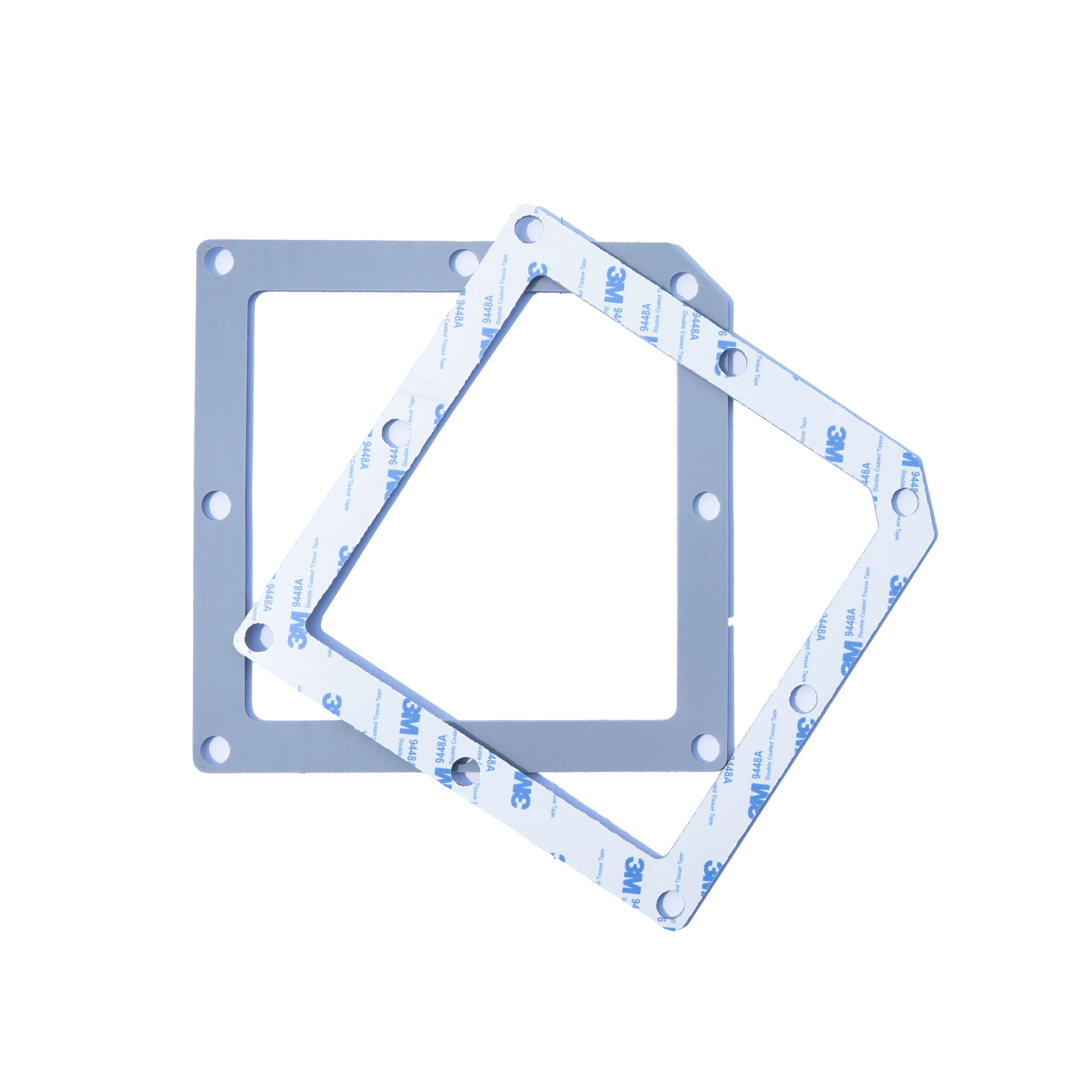
silicone foam gaske
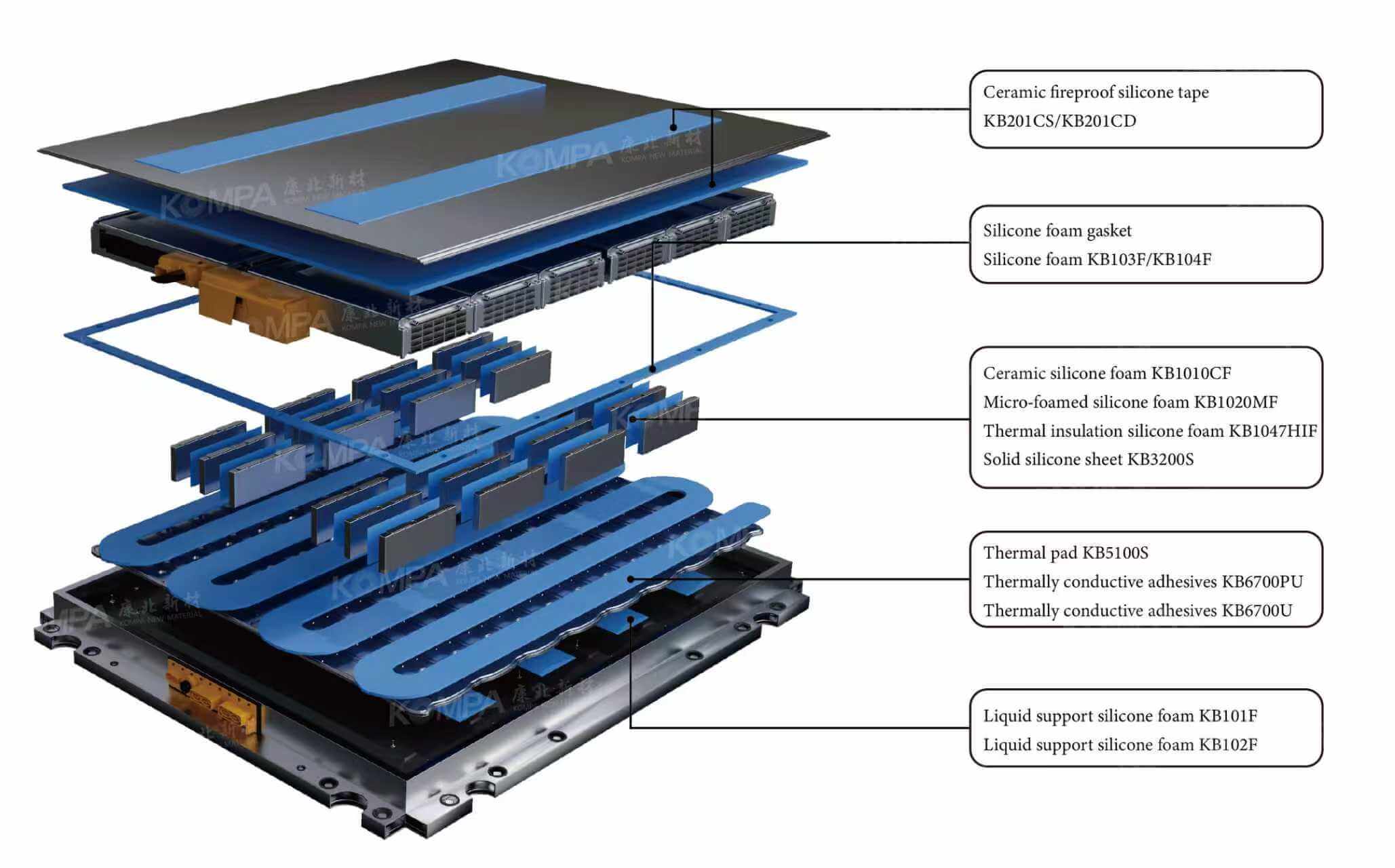
Used as a sealing gasket around battery pack enclosures to prevent dust, moisture, and gas leakage.
Provides flame-retardant barriers and thermal insulation, helping slow fire propagation and protecting cells from thermal runaway.
Maintains long-term compression set resistance even under high temperatures and pressure cycles.
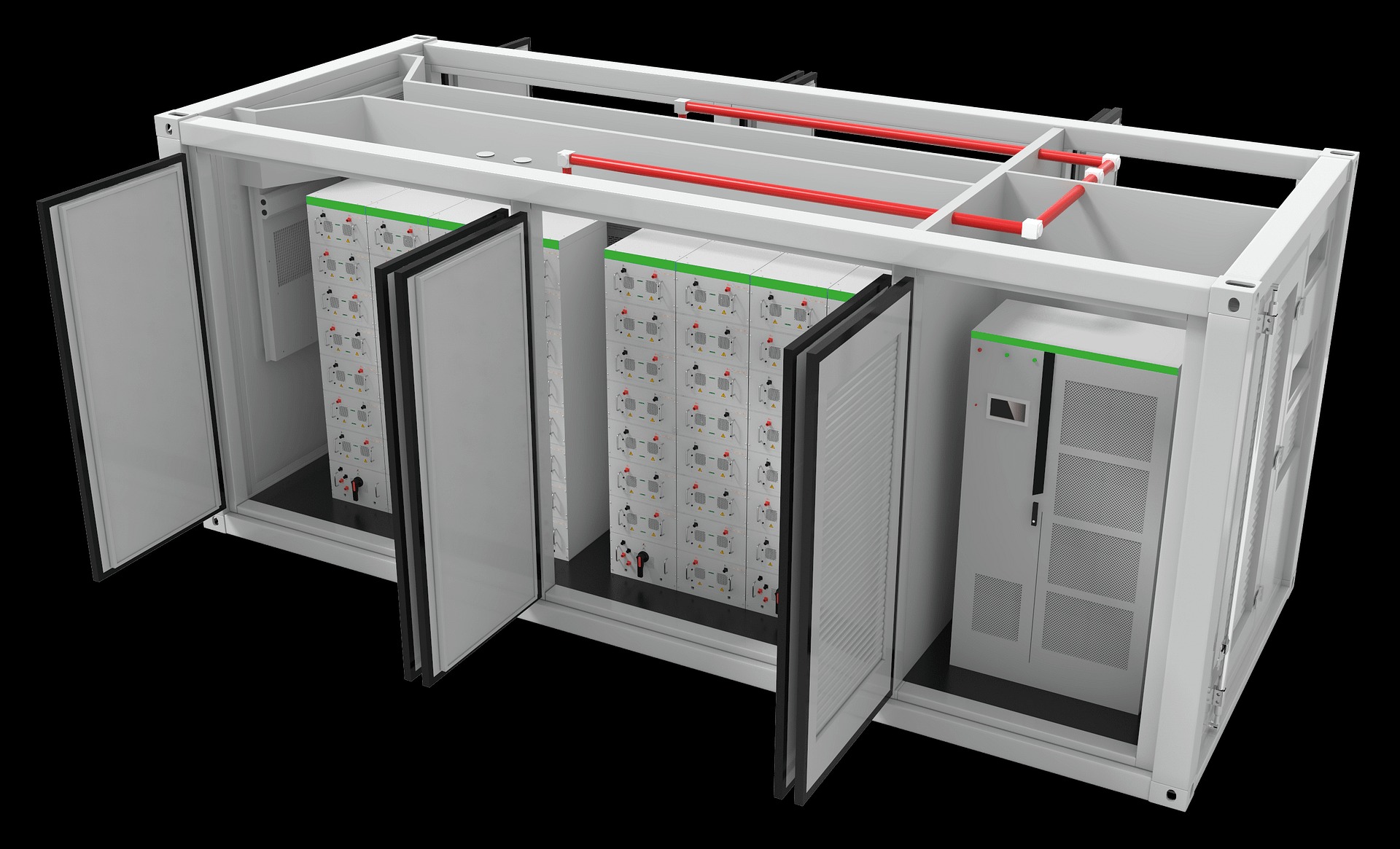
Energy storage cabinets (thermal & electrical insulation)
Acts as thermal barriers to reduce heat transfer between battery modules and cabinet structures.
Offers electrical insulation to prevent short circuits or arcing within compact spaces.
Supports environmental sealing against dust, moisture, and vibration.
Our Key Partners Include
Huawei – Global leader in communications, smart devices, and energy solutions
ZENERGY – Trusted supplier specializing in new energy battery systems
SAIC Motor – One of China’s largest and most innovative automotive manufacturers
Dongfeng Motor – Leading state-owned company in commercial and passenger vehicles
CRRC – World’s largest manufacturer of rail transit equipment and systems.
CALB – Global innovator in lithium battery technology and energy storage solutions
Why KOMPA? Unlike global giants that serve broad markets, we focus on energy applications, making us the ideal partner for battery manufacturers, EV OEMs, and energy storage integrators.
KB103F Silicone Foam
https://www.kompsisiliconematerial.com/closed-cell-silicone-foam-kb103f.html
EV Battery Materials
https://www.kompsisiliconematerial.com/electric-battery-system.html
Energy Storage Materials
https://www.kompsisiliconematerial.com/photovoltaic-energy-storage.html
Contact KOMPA for Samples, Pricing or Technical Support
Our engineering team can help you choose the best silicone foam solution for your EV, ESS or industrial project.
Email: jenny@kompanewmaterials.com
Website: www.kompsisiliconematerial.com


